
printed circuit board assembly
Printed circuit board assembly (PCBA) manufacturers play a pivotal role in the electronics industry, providing the backbone for a myriad of electronic devices. One of the critical advancements in technology is the increasing demand for high-frequency applications, such as in telecommunications, radar systems, and high-speed data processing. The question arises: Can PCBA manufacturers produce assemblies suitable for these high-frequency applications? The answer is a resounding yes, though it requires specialized techniques and materials to meet the stringent demands of high-frequency performance.
High-frequency applications necessitate a precise approach to printed circuit board assembly manufacturer due to the unique challenges posed by high-speed signals. These challenges include signal integrity issues, electromagnetic interference (EMI), and the need for minimal signal loss. To address these, PCBA manufacturers employ several strategies, starting with the selection of appropriate materials.
Materials play a crucial role in the performance of high-frequency PCBs. Standard FR-4 substrates, commonly used in low-frequency applications, are often insufficient for high-frequency circuits due to their dielectric properties. Instead, manufacturers use advanced materials such as Rogers, Teflon, and other high-performance laminates. These materials offer superior dielectric constants and lower loss tangents, which are essential for maintaining signal integrity and reducing signal loss at high frequencies.
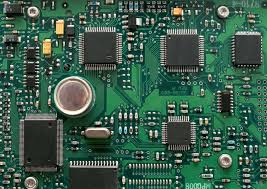
Can printed circuit board assembly manufacturer be used in high-frequency applications?
The design of high-frequency PCBs also requires careful consideration of the trace geometry. Impedance control is vital in these applications, as impedance mismatches can lead to signal reflections and degradation. Manufacturers use advanced simulation tools to design traces with precise width, spacing, and layering to ensure consistent impedance. Techniques such as differential pair routing and controlled impedance routing are commonly used to manage high-frequency signals effectively.
Another critical aspect is the layout and stacking of PCB layers. High-frequency PCBs often use multilayer designs to provide adequate ground planes and shielding. Ground planes help to minimize EMI and provide a stable reference for signal return paths, which is crucial for maintaining signal integrity. The layer stack-up is meticulously planned to reduce crosstalk and ensure that high-frequency signals are isolated from other parts of the circuit.
Manufacturing high-frequency PCBs requires high precision and stringent quality control. The etching process must be finely tuned to maintain the exact trace dimensions, as any variations can affect the impedance and overall performance. Advanced manufacturing techniques such as laser direct imaging (LDI) and precision drilling are employed to achieve the necessary accuracy. Moreover, the use of high-frequency-compatible solder masks and surface finishes ensures that the PCB can handle the demands of high-speed signals without degradation.
Thermal management is another critical factor in high-frequency applications. High-speed circuits can generate significant heat, which needs to be efficiently dissipated to prevent performance issues. PCBA manufacturers use thermal vias, heat sinks, and advanced cooling techniques to manage heat dissipation. Proper thermal management not only ensures reliable operation but also extends the lifespan of the high-frequency components.
Testing and validation are indispensable steps in the production of high-frequency PCBAs. Manufacturers conduct rigorous testing using vector network analyzers (VNAs), time-domain reflectometers (TDRs), and other specialized equipment to measure the performance of the high-frequency circuits. These tests help identify any potential issues related to signal integrity, impedance matching, and overall functionality. Ensuring that the PCB meets all performance specifications before deployment is critical to the success of high-frequency applications.
In conclusion, PCBA manufacturers are fully capable of producing assemblies for high-frequency applications, provided they employ the right materials, design techniques, and manufacturing processes. By leveraging advanced materials, precise design methodologies, and rigorous testing protocols, manufacturers can create PCBAs that meet the stringent requirements of high-frequency electronics. As technology continues to evolve, the expertise and capabilities of PCBA manufacturers will play a vital role in supporting the next generation of high-speed, high-frequency electronic devices.