
India’s engineering exports to the United Kingdom could nearly double over the next five years, reaching over $7.5 billion by 2029-30, following the newly signed Free Trade Agreement (FTA) between the two countries. According to the commerce ministry, the export of key engineering products—including electrical machinery, auto parts, industrial equipment, and construction machinery—is expected to grow at a compound annual growth rate (CAGR) of 12–20%.
The ministry said that the FTA aligns with India’s broader target of achieving $250 billion in engineering exports by 2030, reinforcing the UK’s position as a vital trade partner. Currently, the UK is India’s sixth-largest engineering export market, having registered a growth rate of 11.7% in 2024–25 compared to the previous year.
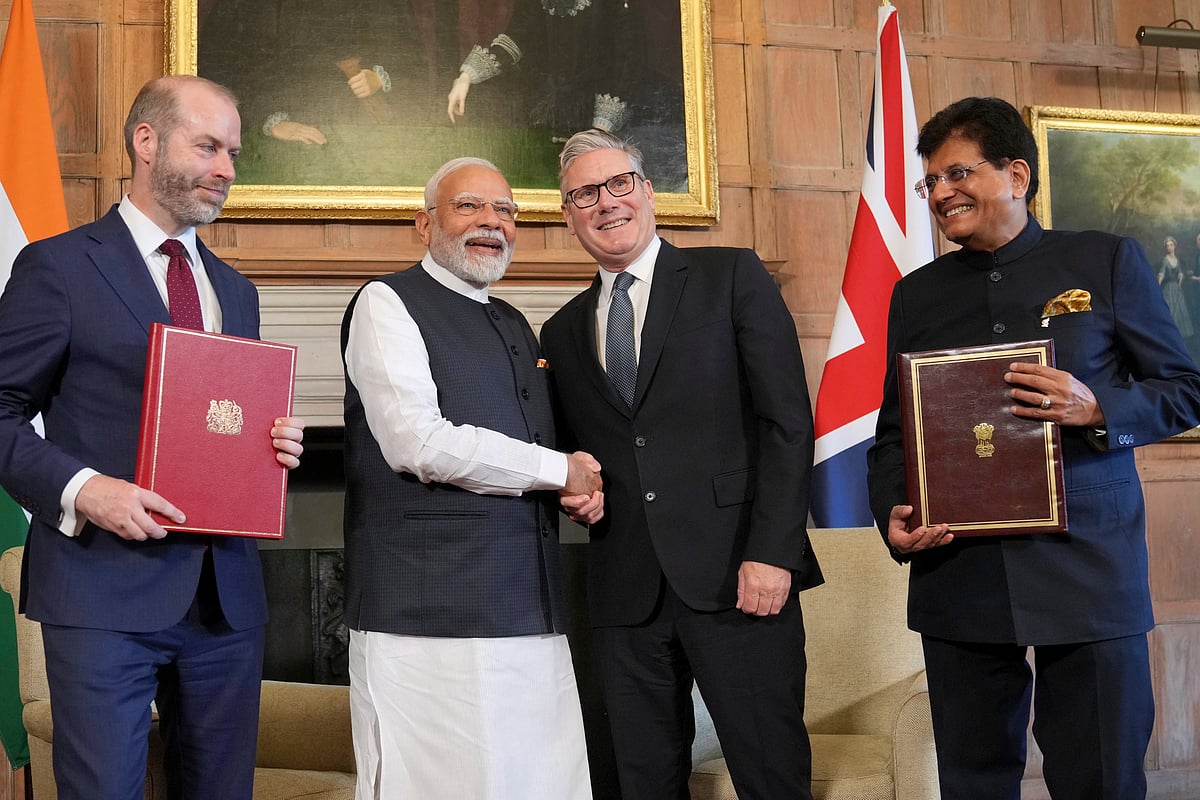
The India–UK Free Trade Agreement was formally signed on Thursday in London during Prime Minister Narendra Modi’s visit to the United Kingdom. UK Prime Minister Keir Starmer was also present at the signing ceremony. This deal aims to boost bilateral trade to $120 billion by 2030.
The ministry also mentioned that as part of the agreement, the UK will grant zero-duty access to non-ferrous metals such as copper, aluminium, nickel, zinc, lead, tin, and other base metals, providing a significant boost to India’s metal exports. Tariffs will also be completely removed on industrial machinery and electrical machinery, supporting India’s growing footprint in advanced manufacturing and supply chain integration.
In the automotive sector, Indian exports of conventional vehicles and auto components will enjoy duty-free access, while electric, hybrid, and plug-in vehicles will be allowed concessional access under Tariff Rate Quotas (TRQs).