
designing circuits for hdi circuit board
Designing circuits for High-Density Interconnect (HDI) circuit boards presents a unique set of challenges and considerations for engineers and designers. HDI boards, known for their compact size, high routing density, and advanced functionality, offer numerous advantages but also pose challenges that require careful attention and expertise to overcome. This article explores some of the key challenges faced in designing circuits for HDI boards and strategies for addressing them to achieve optimal performance and reliability.
One of the primary challenges in designing circuits for HDI boards is managing signal integrity, particularly in high-speed and high-frequency applications. The densely packed layout of components and traces on HDI boards can lead to signal degradation, impedance mismatches, and electromagnetic interference (EMI), compromising the performance of sensitive signals. Achieving proper signal routing, impedance control, and noise suppression requires meticulous planning and simulation to ensure consistent and reliable signal transmission across the board.
Furthermore, the compact size of hdi circuit board presents challenges in routing and placement of components, especially for designs with high component density or complex signal requirements. Designers must carefully balance the trade-offs between space constraints, signal integrity, and thermal management to optimize board layout and functionality. Creative routing techniques, such as microvias, buried vias, and blind vias, can help maximize routing density and minimize signal distortion while maintaining board manufacturability.
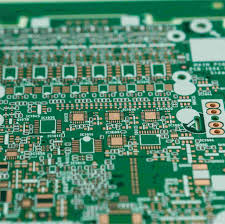
What are the challenges of designing circuits for hdi circuit board?
Moreover, the use of advanced fabrication techniques, such as laser drilling and sequential lamination, introduces additional complexity and cost considerations in HDI board design. Designers must carefully plan for these manufacturing processes and ensure compatibility with their design requirements and constraints. Factors such as via aspect ratio, minimum trace width and spacing, and material compatibility must be carefully considered to ensure manufacturability and reliability of HDI boards.
Another challenge in designing circuits for HDI boards is thermal management, particularly in applications with high power density or temperature-sensitive components. The compact layout and limited space for thermal dissipation on HDI boards can lead to thermal hotspots, which can degrade component performance and reliability. Designers must implement effective thermal management strategies, such as heat sinks, thermal vias, and adequate ventilation, to dissipate heat and maintain optimal operating temperatures.
Furthermore, the demand for miniaturization and high-density integration in electronic devices places additional pressure on HDI board designers to meet stringent size and weight constraints while maintaining performance and reliability. Designing circuits for HDI boards requires a deep understanding of the trade-offs between size, complexity, functionality, and manufacturability. Designers must strike a delicate balance between these competing priorities to achieve the desired performance and functionality within the available space and budget constraints.
Additionally, ensuring manufacturability and yield optimization are critical challenges in designing circuits for HDI boards. The complexity of HDI board fabrication processes, such as laser drilling, sequential lamination, and microvia filling, can impact yield rates and production costs. Designers must collaborate closely with manufacturing partners to optimize designs for manufacturability, minimize fabrication errors, and maximize yield rates while meeting performance and reliability requirements.
In conclusion, designing circuits for HDI circuit boards presents a myriad of challenges related to signal integrity, component placement, thermal management, manufacturability, and miniaturization. By leveraging advanced design tools, simulation techniques, and collaboration with manufacturing partners, designers can overcome these challenges and develop high-performance, reliable circuits for HDI boards. With careful planning, creativity, and expertise, HDI circuit board designs can meet the demands of today’s increasingly complex electronic systems while paving the way for future innovations in electronic design and manufacturing.