
primary steps involved in Flexible printed circuit manufacturers
Flexible printed circuit (FPC) manufacturing involves several key steps to produce high-quality, flexible circuitry solutions that meet the diverse needs of various industries. These primary steps encompass the entire manufacturing process, from design and material selection to fabrication, assembly, and testing, ensuring the reliability, performance, and functionality of the final FPC product.
The first step in flexible printed circuit manufacturers is the design phase, where engineers work closely with clients to develop custom circuit layouts and configurations tailored to specific application requirements. Using computer-aided design (CAD) software, designers create detailed schematics and layout files that define the placement of components, traces, vias, and other features on the flexible substrate. Design considerations include electrical performance, signal integrity, thermal management, mechanical flexibility, and manufacturability.
Once the design is finalized, the next step is material selection, where manufacturers carefully choose substrate materials, adhesives, and conductive materials based on the requirements of the FPC design and the intended application. Common substrate materials for FPCs include polyimide (PI) and polyester (PET), which offer excellent flexibility, thermal stability, and dielectric properties. Adhesives and conductive materials are selected for their compatibility with the substrate, solderability, and mechanical properties.
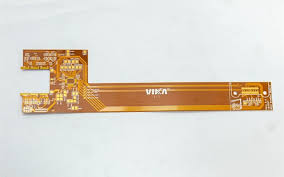
What are the primary steps involved in Flexible printed circuit manufacturers?
After material selection, the fabrication process begins, starting with the preparation of the flexible substrate. Substrate materials are cleaned, coated with adhesives, and laminated together to form multi-layer constructions, if needed. The laminated substrate is then processed using precision manufacturing techniques such as laser cutting, drilling, and etching to create the desired circuit patterns, features, and interconnections. Advanced manufacturing equipment and processes are employed to ensure precise registration, alignment, and dimensional accuracy of the circuitry.
Once the circuit patterns are formed, the next step is the deposition of conductive materials onto the substrate to create electrical interconnections. This is typically done using techniques such as screen printing, inkjet printing, or electroplating to apply conductive traces, pads, and vias onto the substrate surface. The conductive materials may include copper, silver, or conductive inks formulated with metallic particles or polymers.
After the conductive materials are deposited, the FPC undergoes a series of post-processing steps to ensure the integrity and reliability of the circuitry. This includes processes such as surface treatment, solder mask application, and surface finish deposition to protect the conductive traces, improve solderability, and enhance the performance of the FPC. Surface treatments such as plasma cleaning or chemical etching remove contaminants and oxides from the substrate surface, ensuring proper adhesion and solderability of components.
Once the FPC is fabricated, the final step is assembly, where components such as integrated circuits (ICs), resistors, capacitors, and connectors are soldered onto the flexible substrate to complete the circuit assembly. Components may be soldered using surface-mount technology (SMT), through-hole soldering, or selective soldering techniques, depending on the type of components and the complexity of the assembly. Automated assembly equipment and processes are used to ensure accurate component placement, soldering, and inspection.
Finally, the assembled FPC undergoes rigorous testing and quality assurance procedures to verify its electrical performance, functionality, and reliability. This includes electrical testing, visual inspection, thermal cycling, and environmental testing to ensure that the FPC meets the specified requirements and standards. Any defects or issues identified during testing are addressed through rework or corrective actions to ensure the quality and reliability of the final product.
In conclusion, flexible printed circuit manufacturers follow a series of primary steps, including design, material selection, fabrication, assembly, and testing, to produce high-quality FPCs that meet the diverse needs of various industries. By carefully managing each step of the manufacturing process and utilizing advanced materials, equipment, and processes, manufacturers can ensure the reliability, performance, and functionality of flexible circuitry solutions for a wide range of applications.